


TRECOVERY BY TUNGTEK / SERVICES
SSD Data Recovery
SSDs require assessment of the controller, firmware and how data is stored in memory chips. TUNGTEK accepts SATA SSDs, M.2 NVMe drives and integrated storage cases to determine a feasible approach.
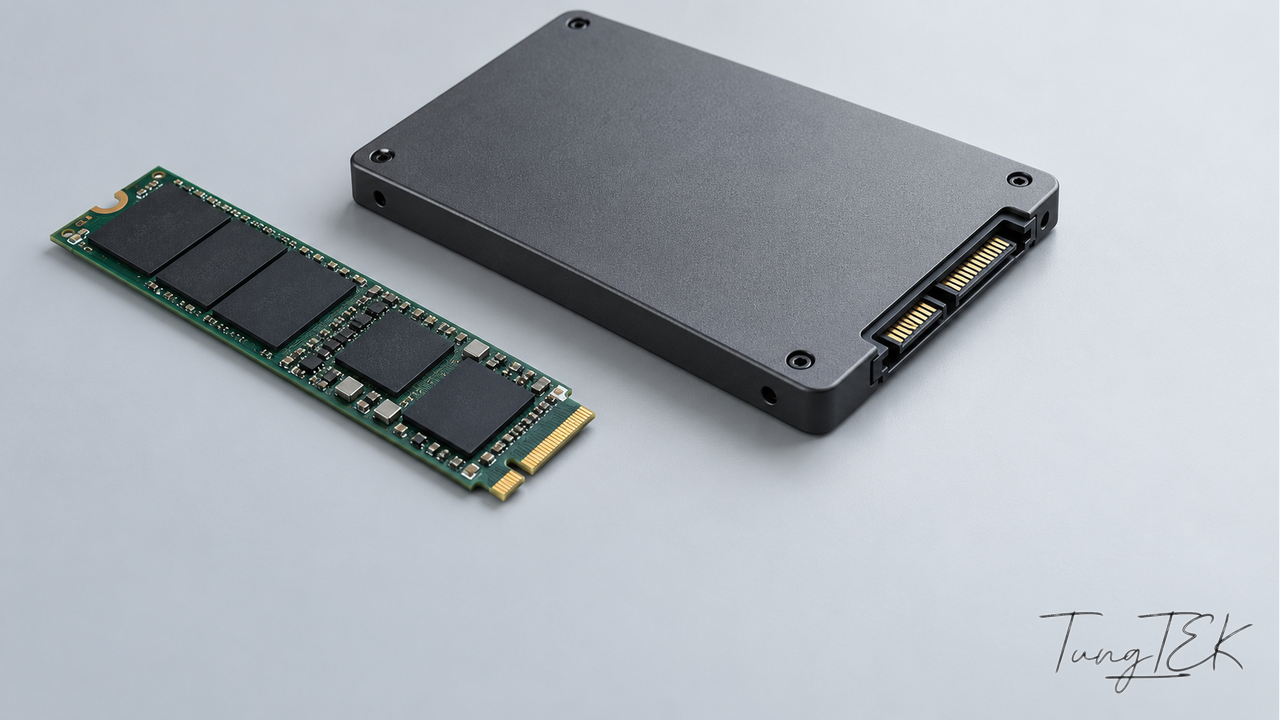
Situations that need assessment.
SSD suddenly fails or is no longer detected
A previously working device disappears, reports an unusual capacity or becomes inaccessible.
Lost partitions or an operating system that will not boot
Determine whether the fault involves the device or storage structures. Reinstalling Windows or repairing the drive can overwrite data that needs recovery.
Accidental deletion/formatting and the effects of TRIM
TRIM and SSD garbage collection may make deleted data unrecoverable. Assess each case and avoid continuing to use the drive.
BitLocker or device-encrypted drives
Preserve valid passwords and recovery keys. Reading physical data does not necessarily allow access to encrypted content.
Our approach to the data.
Check the model, detection status and readability before choosing an approach. When stable access is possible, prioritize imaging the source for analysis on a copy.
Do not update firmware, perform Secure Erase or install recovery tools on the failing SSD yourself. Extraction feasibility depends on device design, memory condition, data mapping and any protection keys.
Related Case Studies
Surface Laptop 1769 · SSD onboardUnderstanding flash data limitations
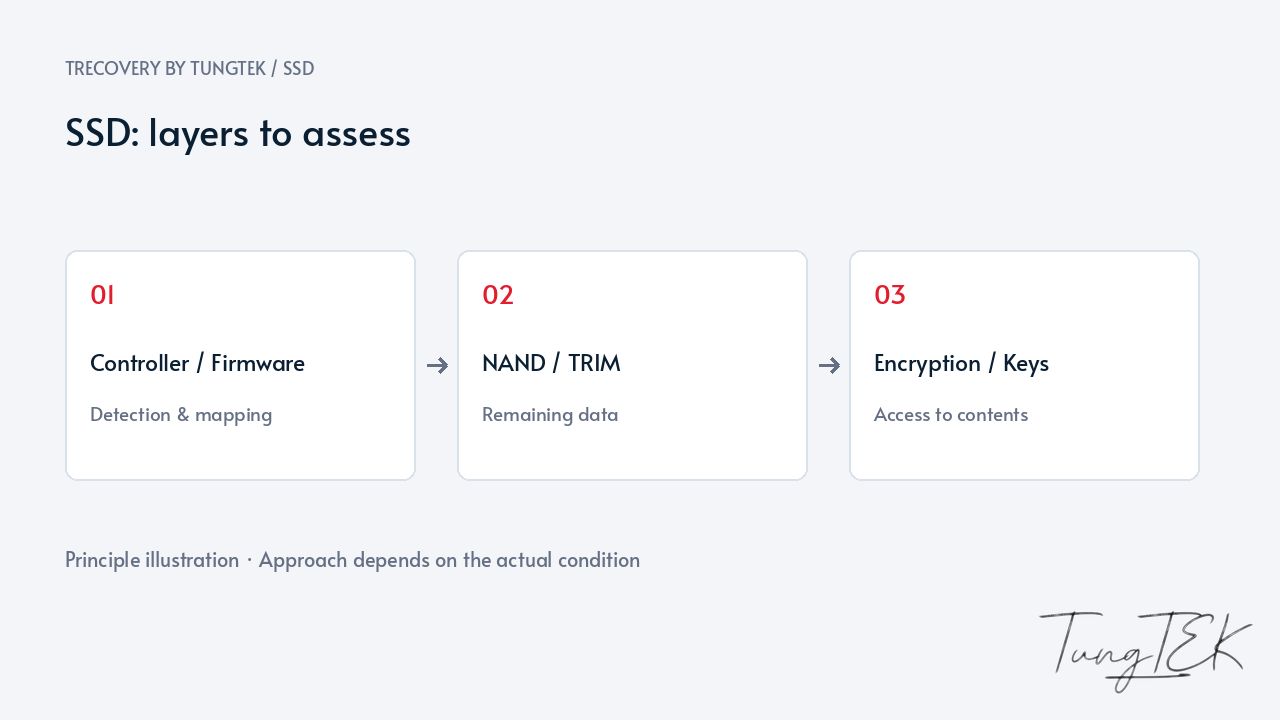
SSD data passes through mapping managed by the controller. Controller faults, firmware, NAND, TRIM and encryption can produce similar access symptoms but require different assessment paths. The model, firmware, operating system and event timeline matter at intake.
Reading memory chips does not automatically reconstruct a complete file system. Preserve valid recovery keys for device encryption; for deleted data, assess TRIM and subsequent writes. There is no single recovery percentage applicable to all SSDs.
Handover focuses on usable data: reviewing priority directories, opening sample files and recording missing or unverified items. Output is written to independent destination storage; the source is retained within the agreed scope.
Frequently asked questions
Will disabling TRIM now restore deleted files?
A post-incident setting change does not undo commands already processed or data already released by the device. Assess what remains and avoid repeatedly testing tools on the SSD.
What if a BitLocker SSD has no recovery key?
Preserve legitimate key sources such as management accounts, deployment records or saved recovery keys. Physical extraction does not bypass encryption; opening the contents depends on the keys and actual configuration.
Should I bring the laptop?
For onboard storage, encryption or an undiagnosed fault, keep the computer intact and discuss it before removal. For a removable drive, provide the model, symptoms and intervention history.
Updated October 14, 2026